The present tetrobol belongs to one of the most characteristic coinages of Histiaia on Euboea, dated to c. 300–200 BC. These small silver coins were struck over an extended period and became one of the most recognizable types of the island’s late Classical and Hellenistic coinage.
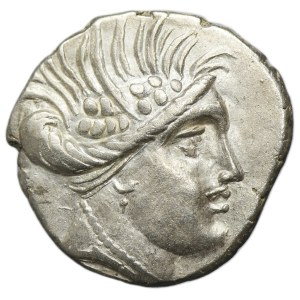
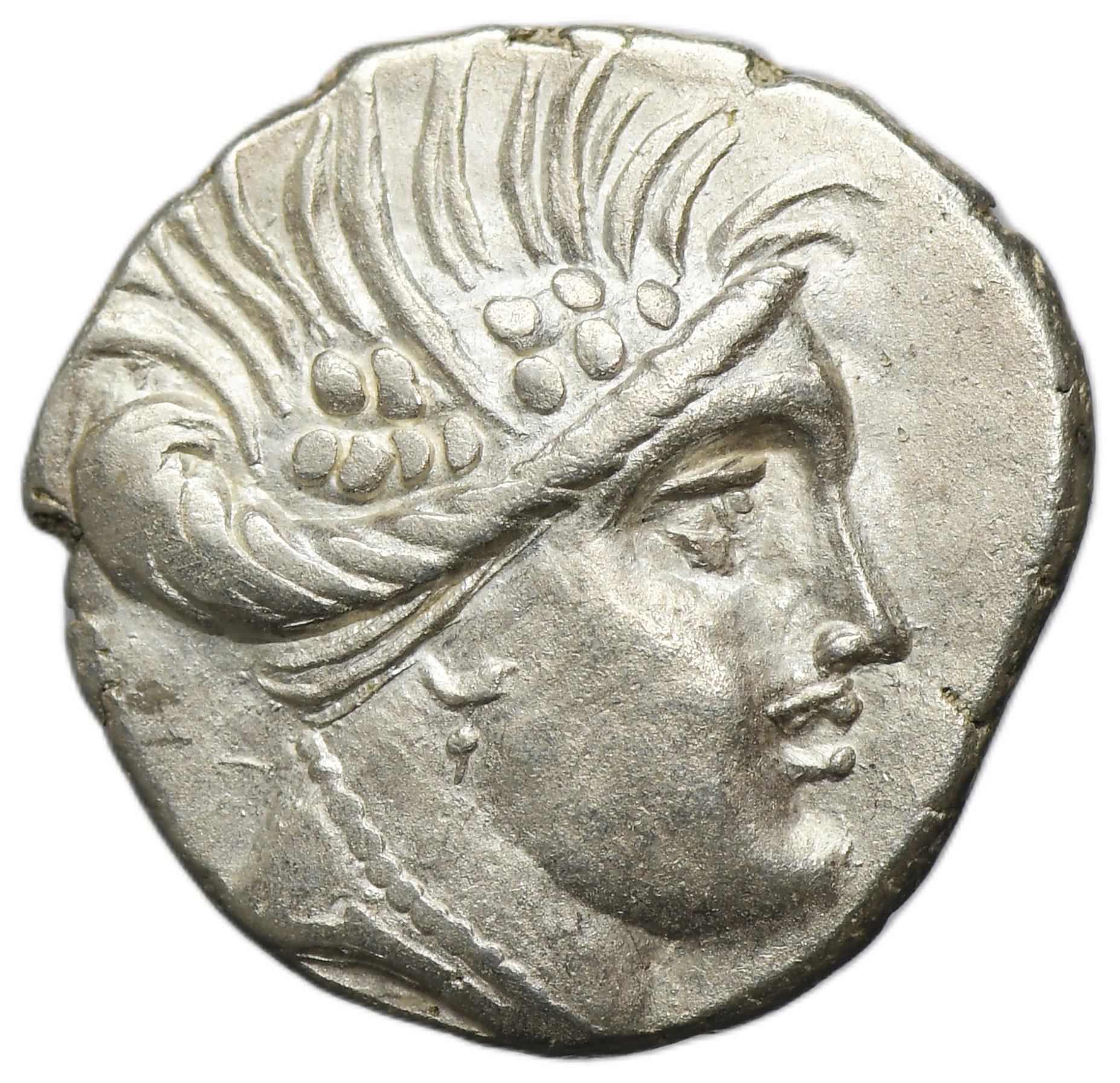
The obverse depicts the head of a nymph or Maenad facing right, her hair adorned with a wreath of grape clusters. The vine and grapes evoke the Dionysiac sphere and give the portrait a distinctly Dionysian character. The delicately modelled features and elaborate hairstyle are among the most distinctive elements of the type.
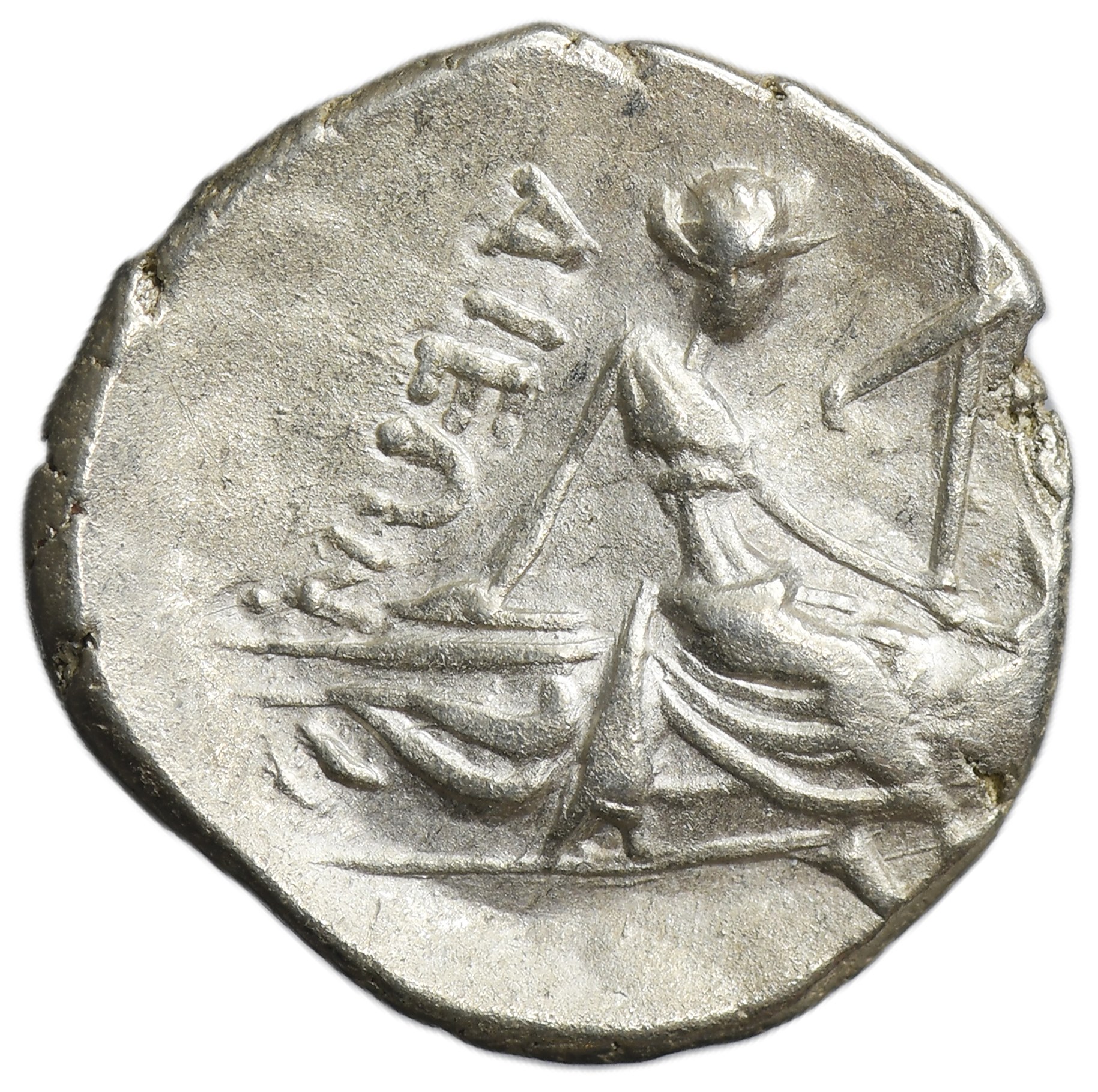
The reverse depicts the nymph Histiaia seated on the stern of a galley, one of the most original iconographic types found on Euboean coinage. Histiaia personifies the city, while the ship’s stern emphasizes its close connection with the sea. Situated at the northern end of Euboea, near important maritime routes through the Oreos Strait, the city occupied a position of considerable strategic and commercial importance.
The city, also known in antiquity as Oreos, played an important role in struggles for control of Euboea. Following periods of Athenian domination, it enjoyed greater autonomy during the Hellenistic age, when the extensive production of silver tetrobols became one of the defining features of its coinage.
The representation of Histiaia aboard a vessel is closely associated with the maritime identity and strategic position of the city. The type was struck for many decades, with individual issues differing in details of the portrait, arrangement of the legend and various control marks.
Ex. Wójcicki Polish Auction House, Auction 9, Lot 5045.
A beautiful example of one of the most characteristic coin types of Hellenistic Euboea, featuring an attractive obverse portrait and the symbolic representation of the nymph Histiaia seated on the stern of a galley.
Greece
Euboia, Histiaia, Tetrobol, 300-200 BC
Obverse: head of Maenad right wearing wreath formed of bunches of grapes
Reverse: nymph Histiaia sitting on the stern of the ship facing right
AIEΩN
Diameter 13 mm, weight 1.7 g