


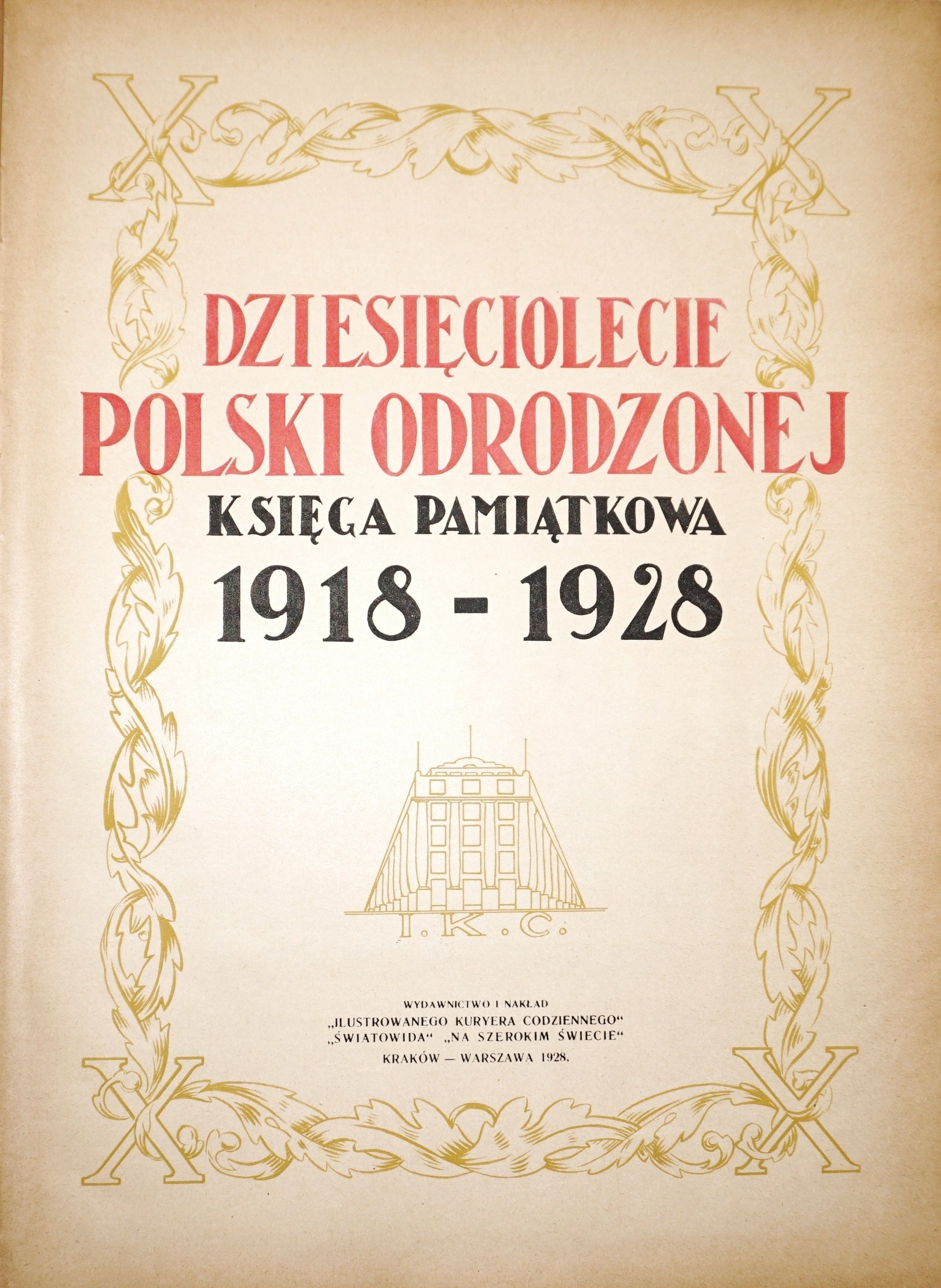




THE DECADE OF POLAND'S RENAISSANCE, 1918–1928
Commemorative Book
[Publisher and Editor-in-Chief: Marjan Dąbrowski; Editor: Piotr Lot; cover, artistic and graphic design, and ornamentation based on a design by artist and painter Alfred Żmuda]
Kraków; Warsaw: Published and printed by “Ilustrowany Kuryer Codzienny,” “Światowid,” and “Na Szerokim Świecie,” 1928
[2], 1207, [2] pp. : facsimiles, photographs, illustrations, maps, portraits, charts, errata ; 40 cm; Burgundy cloth binding, with blind-embossed decorations on the front cover: an eagle in the center; on the wide burgundy border surrounding the emblem, two alternating motifs: the intertwined letters R and P, and the number X against a background of a laurel wreath. On the spine, the book’s title in gold lettering, the dates 1918 and 1928, and the letters R and P and the number X—this time in gold—repeated against the background of a wreath. The composition of the back cover resembles that of the front; instead of the eagle in the central field, there is a stylized building of the IKC concern.
The canvas shows some discoloration and slight scuffs; the book block is in very good condition, neat and clean;
A monumental commemorative publication prepared to mark the tenth anniversary of Poland’s regaining of independence. The publication serves as a comprehensive compendium of knowledge about the first decade of the reborn state—ranging from political and historical issues to the development of the economy, science, culture, and social life.
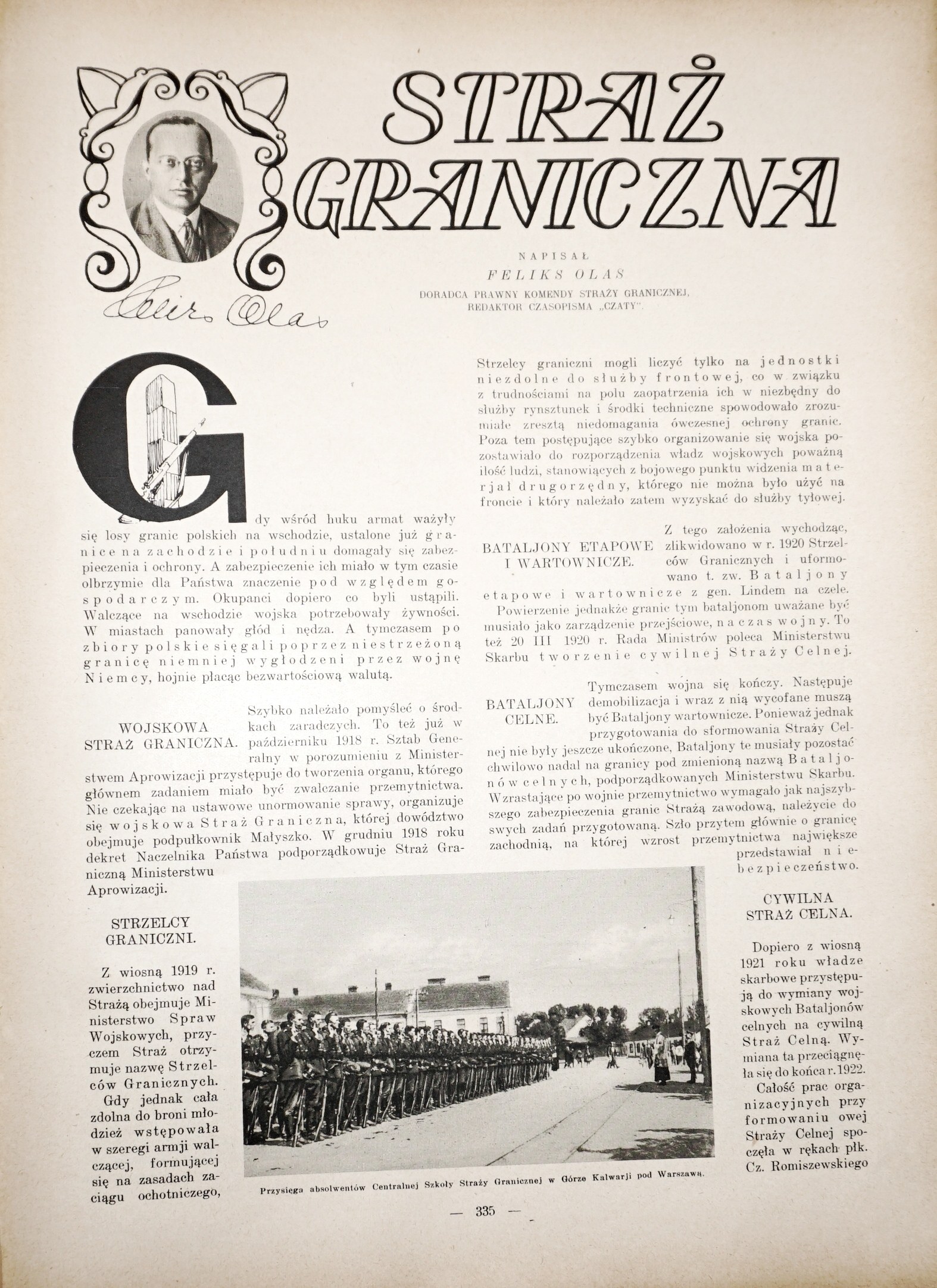
The book contains an exceptionally rich collection of illustrations, including 14 autographs, 115 documents, proclamations, and historical artifacts, 25 maps, and numerous photographs. The volume is supplemented by extensive indexes: a subject index, a geographical index, and indexes of authorities, public and private institutions, enterprises, and names. This publication is a valuable source of knowledge about the realities of the early years of independent Poland.
The thematic scope covers, among other things: geography , history, and the political system; the country’s reconstruction; the development of transportation; health resorts and tourism; education and science; literature and art; social issues and cooperatives; the Polish diaspora abroad, sports, women’s activities, extracurricular education, and the national economy.









