A very nice, definitely above-average piece of a popular issue.
Slight wear on the highest parts of the relief; the background shows signs of age.
The mint luster is well preserved.
The coin was struck on commission at the Philadelphia Mint. The denomination, introduced by the reform of January 11, 1924, was minted between 1924 and 1925 at mints in Paris, London, Birmingham, and Philadelphia. Pursuant to the Act of January 20, 1924, silver coins could be used to pay debts up to a maximum of 100 zlotych. The coin remained in circulation until December 31, 1932, and was exchanged at National Bank of Poland (NBP) counters between 1933 and 1934.
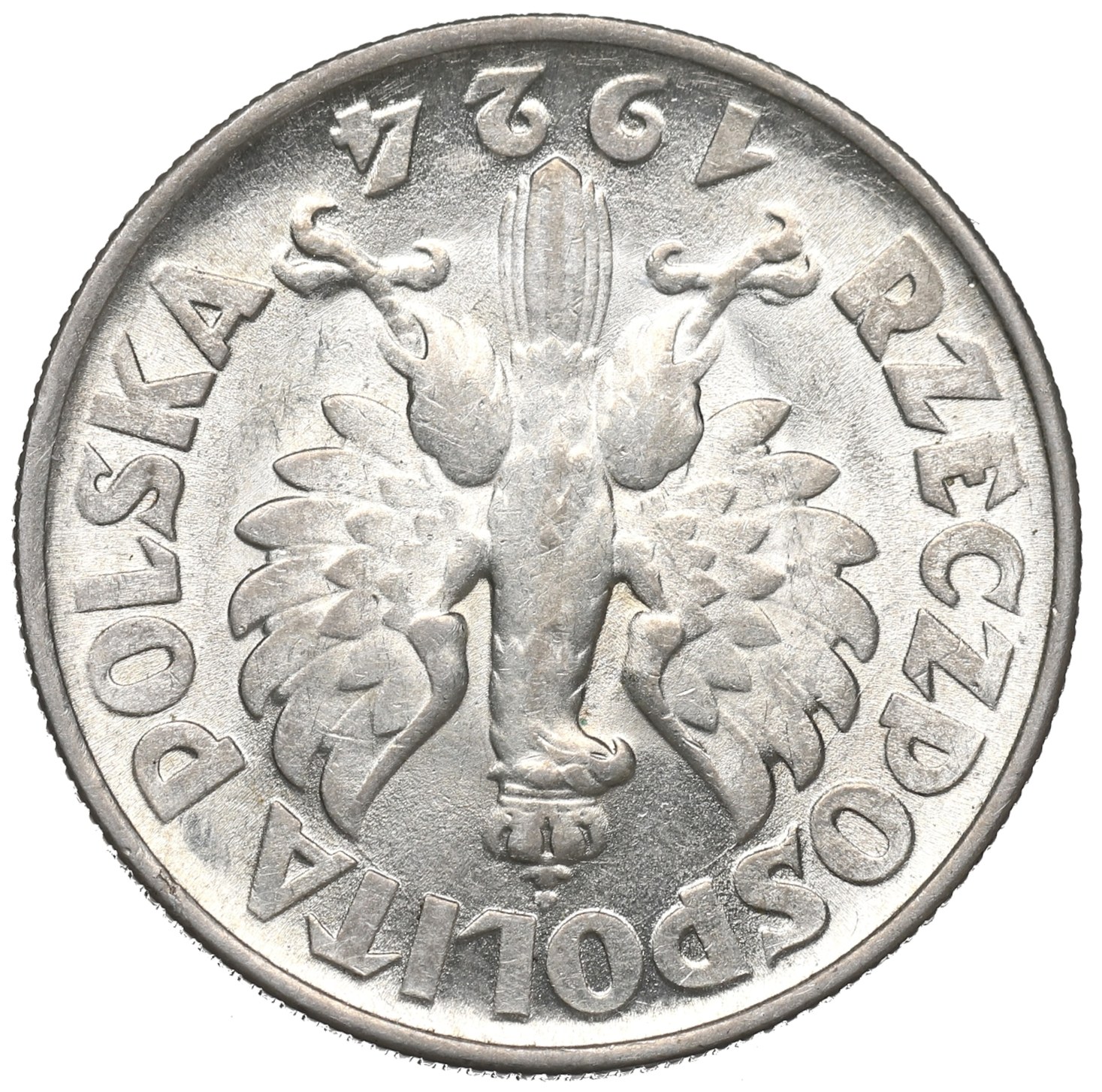
The coins differ from one another depending on the mint where they were struck. Coins from Paris bear the Monnaies de Paris mark—a horn and a torch—and are typically of poorer quality. Coins from Birmingham bear the letter H beneath the eagle’s talon, and the eagle itself is noticeably slimmer than on coins minted at other mints. On the 1924 Philadelphia coins, the obverse and reverse are rotated 180 degrees (known as a “reverse”); neither of the two years minted at this mint bears any mint marks. Coins from London have a dot struck after the year.
The lowest mintage was recorded in Philadelphia in 1924 (800,000 pieces), and the highest mintage was recorded in London in 1925 (11,000,000 pieces).
The coins were struck according to a design by Tadeusz Breyer from .750 silver, with a diameter of 27 mm and a standard weight of 10 g.
Obverse: a crowned eagle, with the inscription “RZECZPOSPOLITA POLSKA” and the year along the rim.
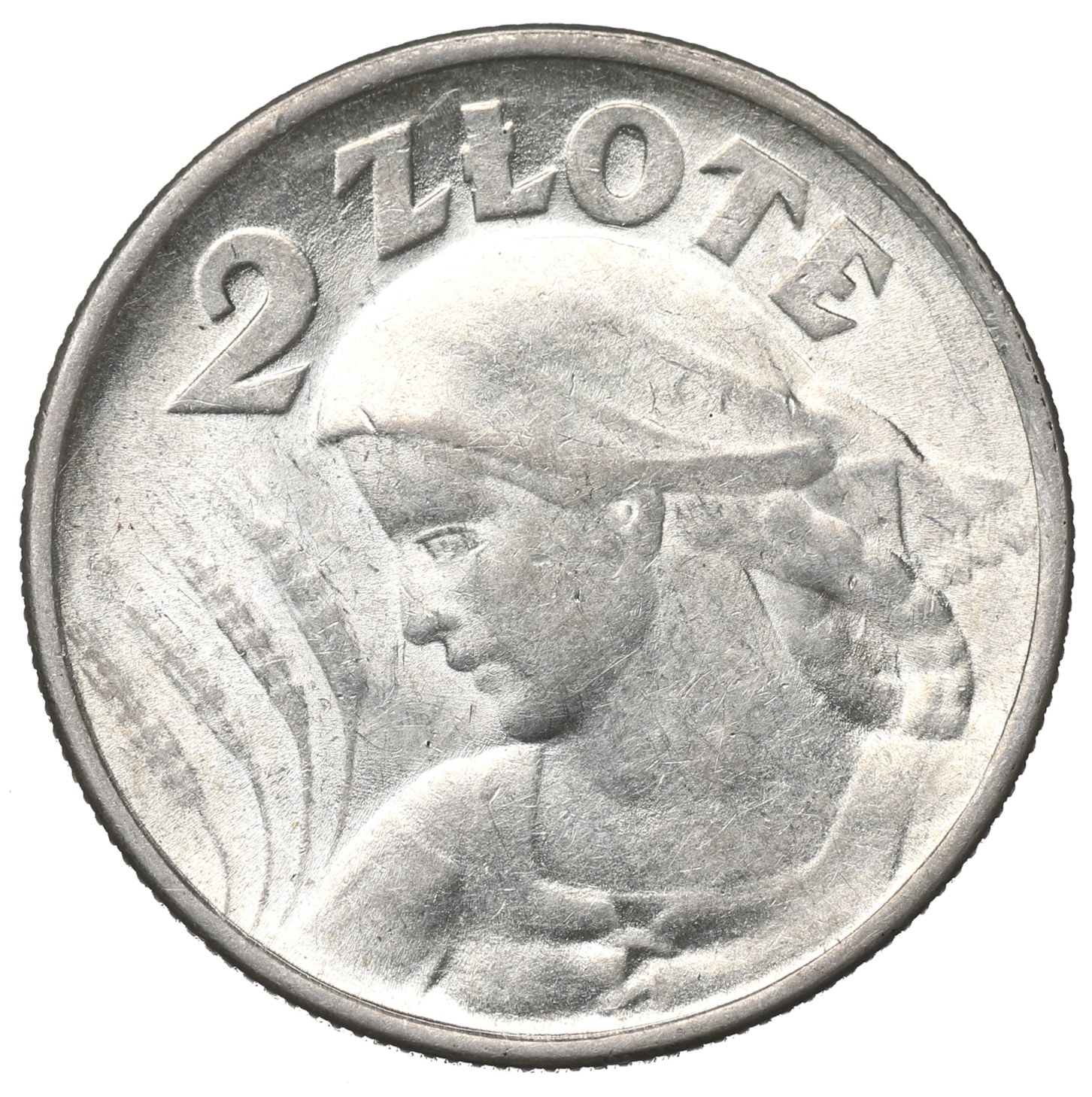
Reverse: a three-quarter view of a girl’s bust wearing a headscarf, with ears of grain in front of her; above, the inscription “2 zlote.”
Edge: serrated;