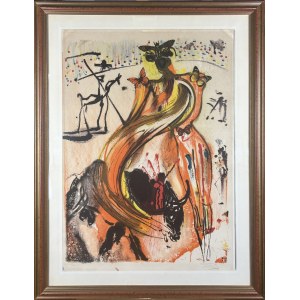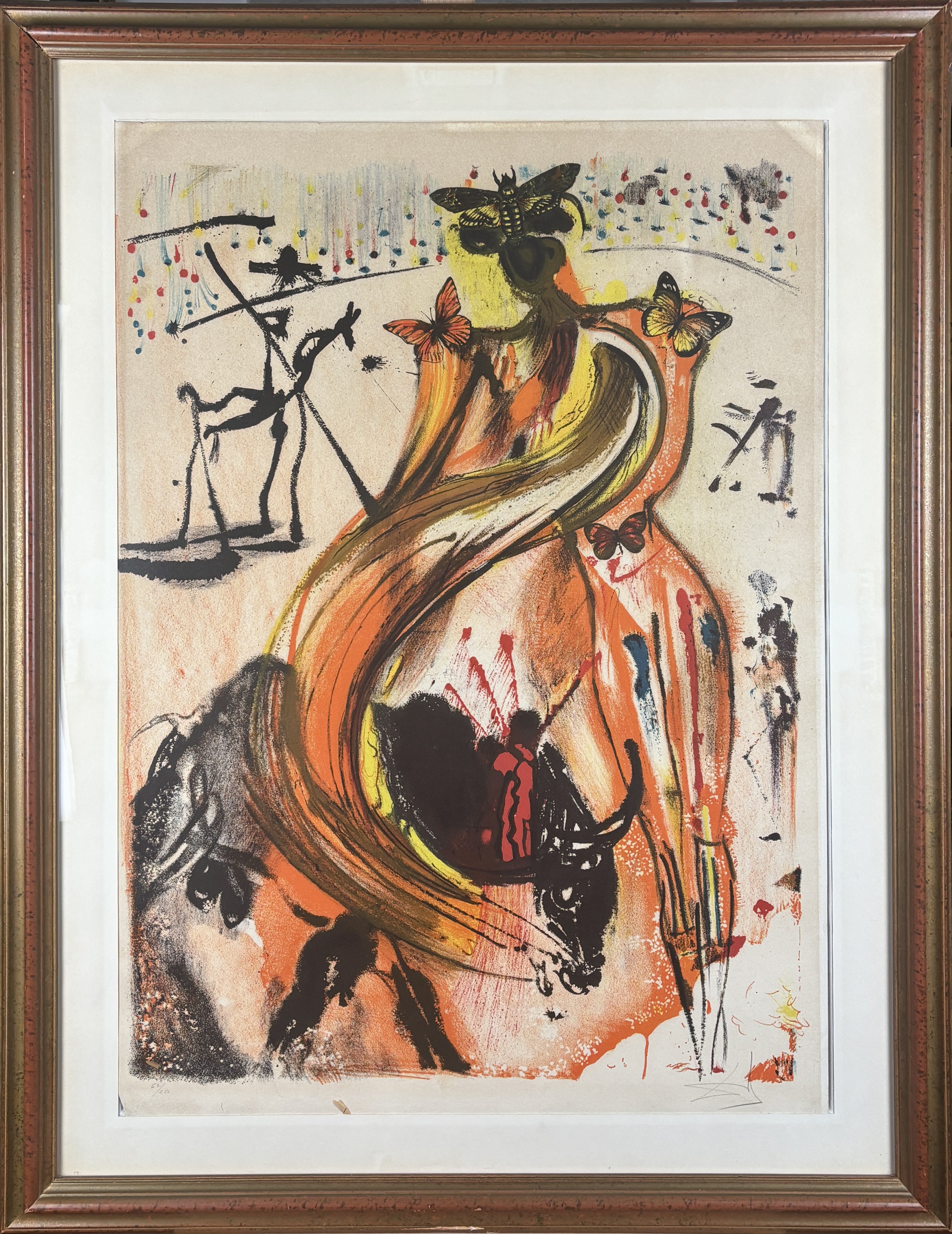
Color lithograph on Arches handmade paper, 75 x 54 cm, framed in a 92 x 72 cm frame;
Limited edition, numbered in pencil 60/250 on the reverse;
Signed in pencil by S. Dalí at the bottom right
The 1972 edition was published by Galerie Börjeson (Malmö, Sweden) in collaboration with A. Reynolds Morse / Salvador Dalí Archives / Jean Lavigne (Paris)
References:*
*; *Salvador Dalí Catalogue Raisonné of Lithographs and Wood Engravings 1956–1980* by Ralf Michler and W. Lopsinger, No. 1358
Provenance: Art Gallery, Paris
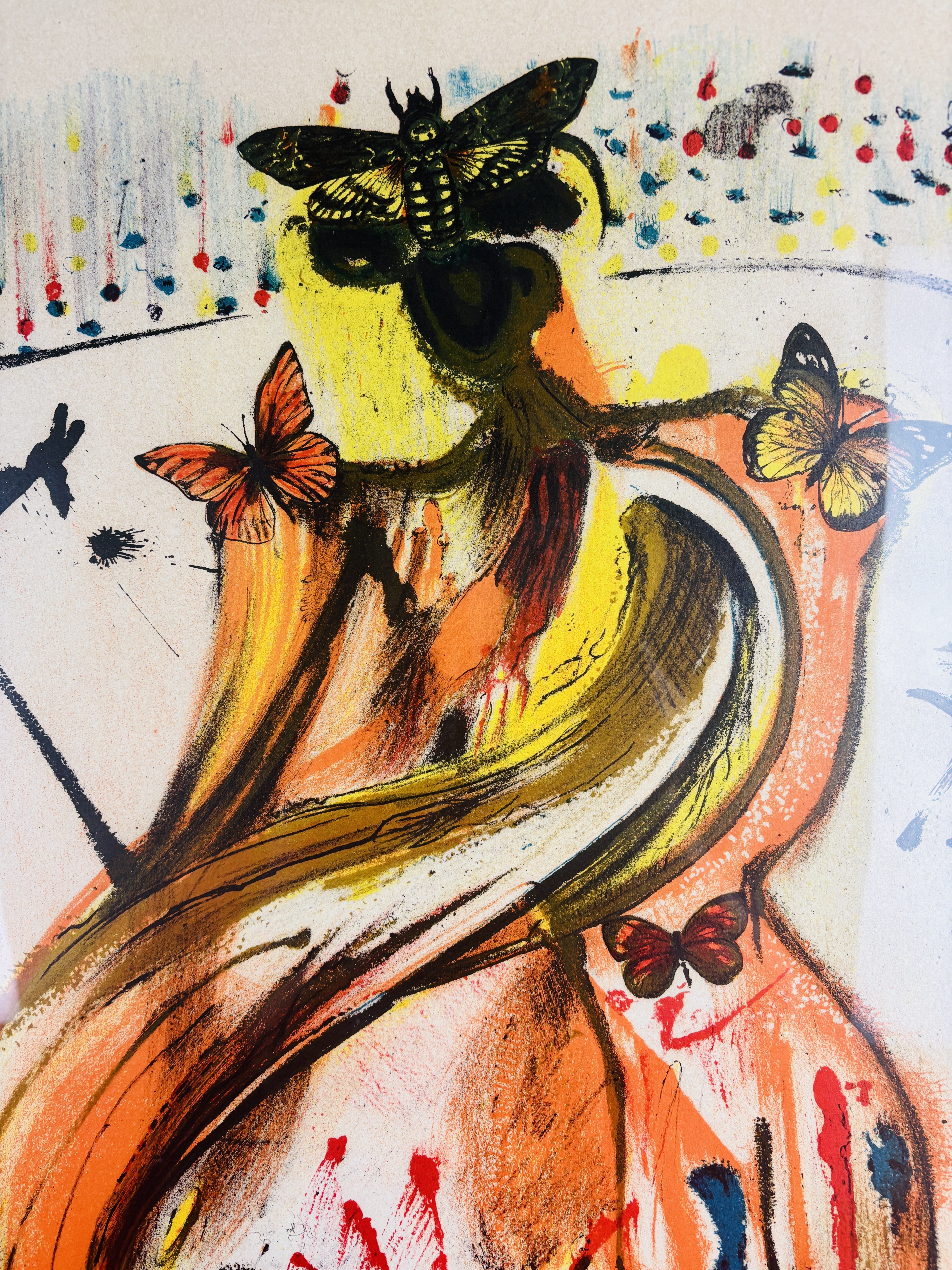
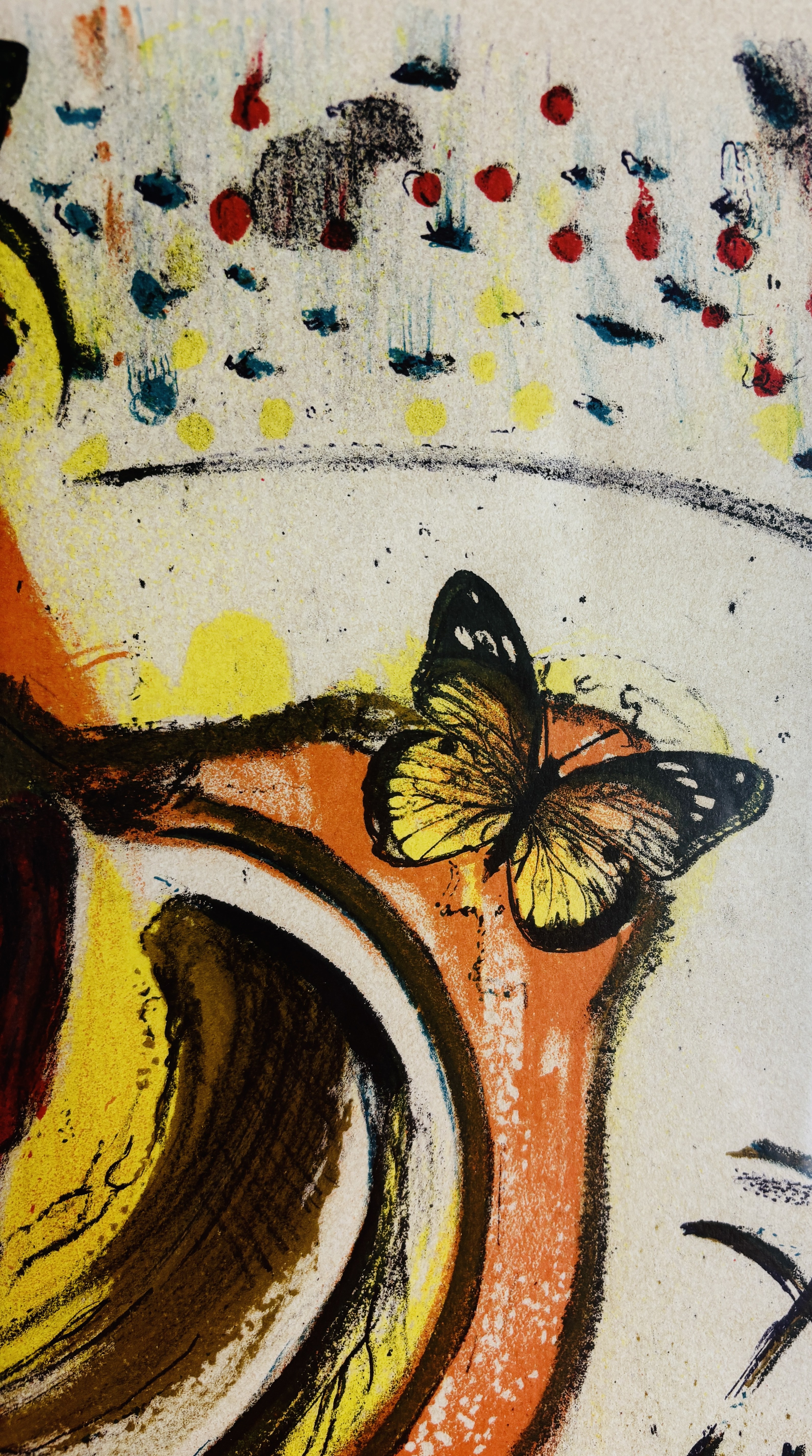
In this work, Salvador Dalí combined the traditional Spanish ritual of bullfighting with his own unique surrealist vocabulary:The Bull and the Matador symbolize Death and Desire. In Dalí’s work, the bull represents primal force, untamed nature, but also the inevitability of fate. The interpenetration of the matador and the animal symbolizes the eternal dance of Eros and Thanatos—passion and death. The most evocative element of the composition. Instead of blood or the brutal trappings of the fight, the figure’s body and surroundings are enveloped by delicate butterflies. For Dalí, the butterfly was a symbol of transformation, the fleeting nature of the moment, the soul, and human sensitivity. Their presence in the brutal world of the bullfight creates a poetic contrast—transforming the bloody spectacle into a mystical metamorphosis. The warm shades of ochre, orange, and red evoke the Spanish sun, the sand of the arena, and the emotions accompanying the duel, freeing the print from a purely static dimension.