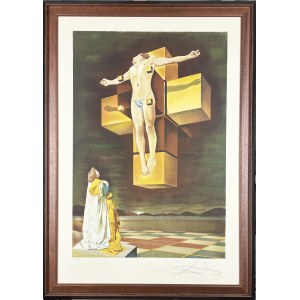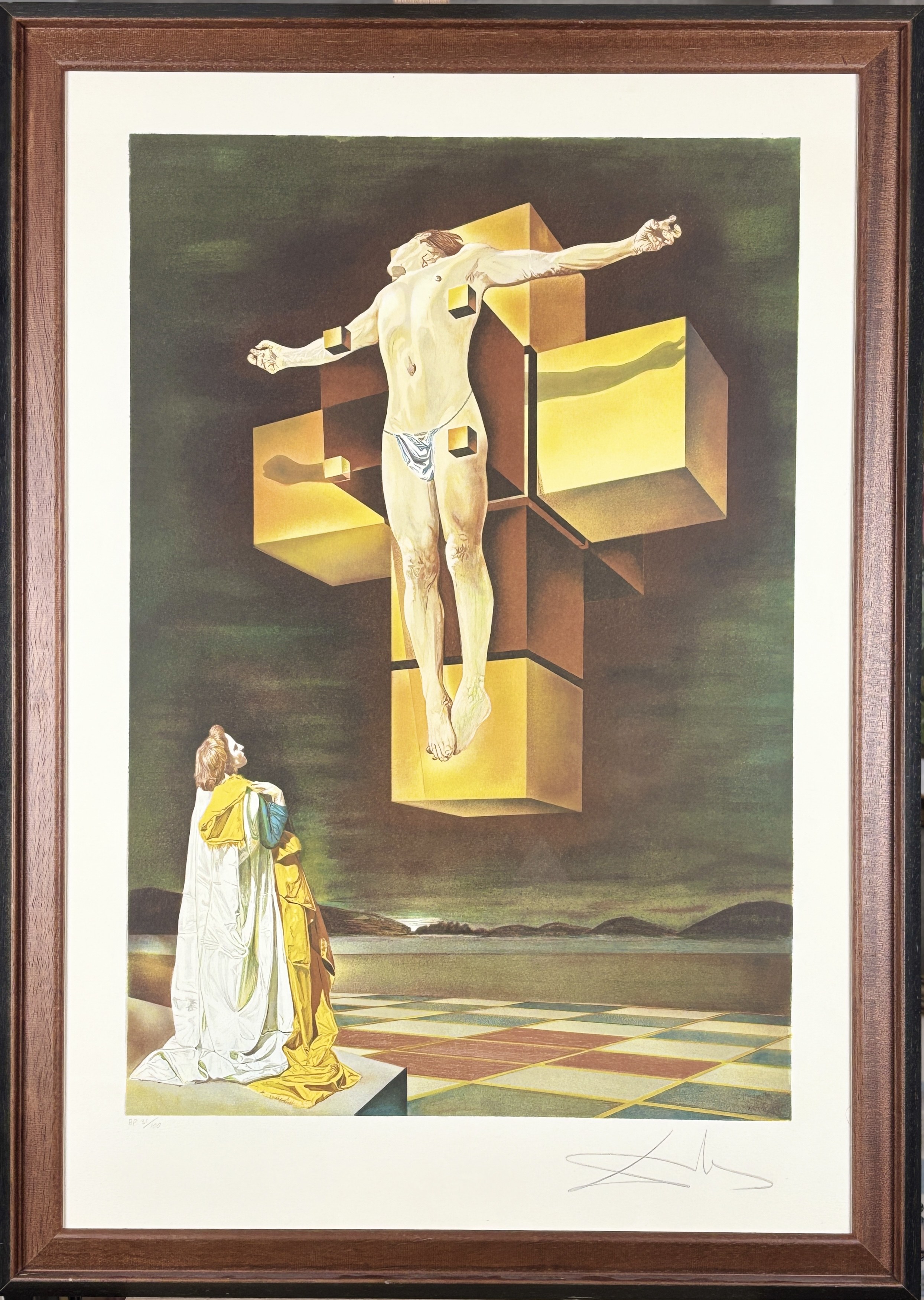
Color lithograph on Arches Velin cotton paper, 71 x 48 cm (composition), mounted in a frame measuring 93 x 67 cm;
A piece from a rare, limited edition of 100 lithographs intended for the artist, the publisher, and collectors; AP 31/100 (Artist’s Proof)
Signed in pencil by the artist in the lower right corner;
Publisher: Gilbert Hamon Editions d'Arte de l'Estampe
Albert Field Catalog: In *The Official Catalog of the Graphic Works of Salvador Dalí*, this work is listed in the section “Authorized Works / Prints After Paintings” (authorized prints based on paintings) under the authorized works from the 1970s and 1980s in the religious works / Crucifixion groups from 1974–1982
*Crucifixion (Corpus Hypercubus)*, oneof Salvador Dalí’s most famous religious paintings, was created in 1954 and is currently housed at The Metropolitan Museum of Art (Met) in New York.
Twenty years later, during a period of immense popularity for Dalí’s work, Gilbert Hamon began working closely and directly with Dalí to create official graphic series depicting his greatest sacred masterpieces (including The Last Supper, Christ of St. John of the Cross, and, indeed, *Corpus Hypercubus*).
The work dates from the period known as“Nuclear Mysticism,” during which Dalí combined his scientific fascination with quantum physics and mathematics with traditional Catholic piety.
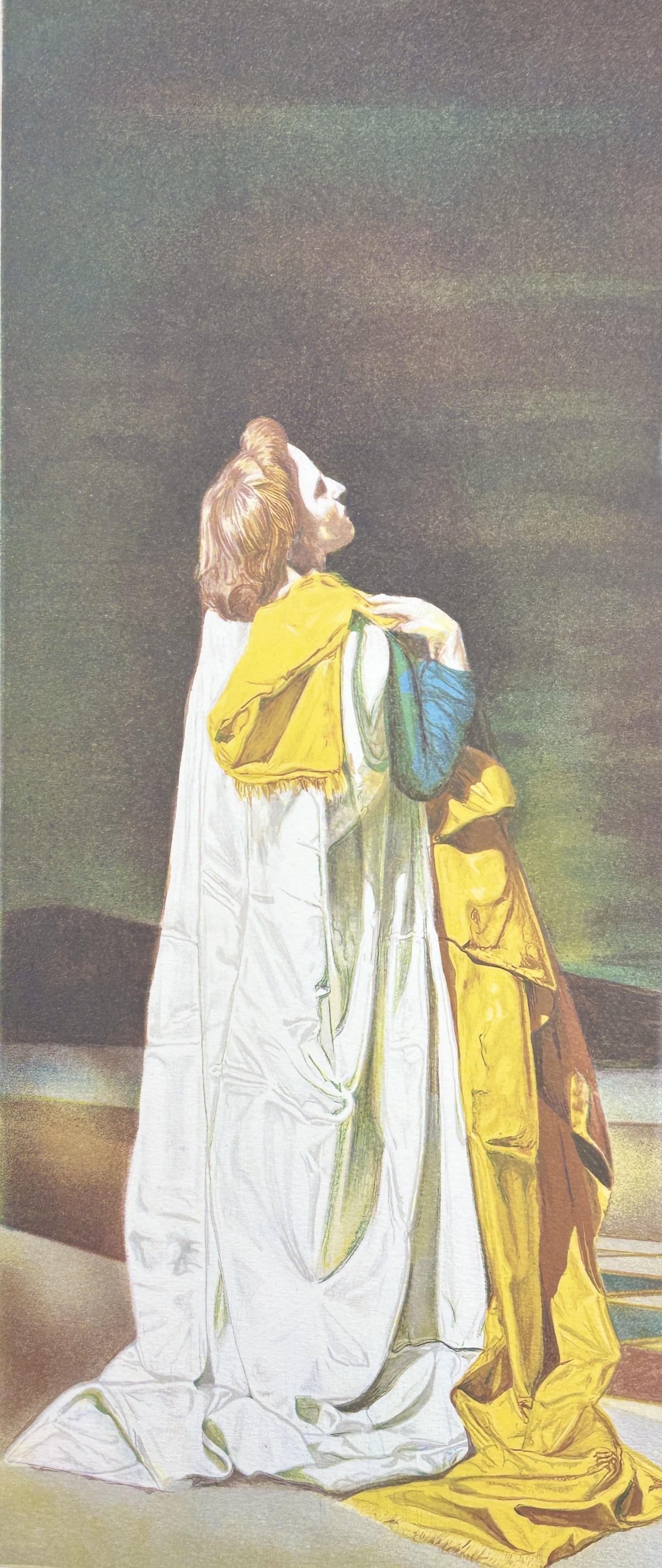
The painting and the lithograph based on it combine Salvador Dalí’s scientific fascinations with profound mysticism. The central point of the composition is a cross depicted as a three-dimensional grid of a four-dimensional cube, or tesseract. In front of it, the body of Christ hovers weightlessly—completely immaculate, devoid of a crown of thorns, nails, or any traces of blood, which underscores the divine and immaterial dimension of this scene. At the bottom, in the foreground, Gala—the artist’s wife and muse—kneels. Depicted in festive, richly draped robes, she embodies the figure of the Virgin Mary or Mary Magdalene, gazing reverently at the floating Christ. The composition is complemented by a background featuring the austere landscape of his hometown, Port Lligat in Catalonia—a motif characteristic of Dalí’s work.